“Spinning Vinyls, Whirling Gears, and Satellites: The Weird World of Radio Production Technology”

Okay, you’re an up-and-coming musician. You’ve played your heart out in dingy bars, you’ve recorded (and re-recorded) your tracks until you can’t feel your fingers anymore and you’re positive that if you have to strum one more chord or hit one more drum, you’ll just… evaporate. I get it. But guess what? Your wild ride has just begun, my friend! Because there’s a whole new world out there, a world where your music gets played on the radio, and it’s a world filled with some hilariously weird and wonderful technology.

“From Your Song to Our Speakers: The Basic Breakdown”

How, you might ask, does your breakout tune — let’s call it “Symphony of Socks and Jandals” — get from your guitar and out into the wide world? Well, imagine this:

First, your sizzling “Symphony” hits a small box affectionately nicknamed (by radio nerds like me) “The Magic Audio Box”. Nothing but a fancy Audio Processor that takes your raw audio and massages, soothes, slaps, teases and finally squeezes every bit of it till it’s fit for radio. We’re talking compression, limiting, EQing – you see it all here, folks!

“Everybody Loves The Audio Processor”

Oh, the sweet, mysterious Audio Processor… She’s like your great aunt who insists on fussing over you before you leave the house, adjusting your collar, smoothing down your hair, checking your teeth for spinach — all to make you presentable to the real world. She does all this with love, I promise, even if it feels like she’s going overboard.

Similarly, the Audio Processor takes your track and gussies it up, ensuring you’ll sound fantastic on both the tinny speakers of granny’s ancient transistor radio and the heavy-duty subwoofers of the neighborhood punk’s tricked-out ride.

“Then Comes Satellites, My Friends”

Once our Audio Processor is done with her magic, your track takes a ride on the Technology Express, jetting off into space via satellite uplink. Yeah, I’m not joking! Your sounds will touch the stars before they reach the ears of your fans—if that’s not a dream come true, I don’t know what is.

At the other end, the signal plummets back to earth, into the eager arms of a network of radio transmitters, ready to blast your “Symphony of Socks and Jandals” out across the country.

“Don’t Forget the Jingles!”

Your trip isn’t over just yet, because no radio play is complete without…you guessed it: Jingles. Yep, whether it’s a gentle “You’re listening to Radio XYZ” or a bombastic “This…. is SUPER FANTASTIC RADIO!”—these jingles are IMPORTANT. They stick in the brain like a stubborn piece of chewing gum to a designer shoe.

Jingles not only add an auditory backdrop to the station but also differentiate your track from your competitor, who’s still trying to figure out the difference between AM and FM. But don’t worry, overkill here can make listeners switch off their radios faster than you can yodel ‘Yeehaw!’. So keep it classy!

“Final Furlong: The Soundboard”

The last stop on your musical journey is the soundboard. This beast is like the conductor of the grandest symphony, controlling what goes on-air and what doesn’t. It’s here that your “Symphony of Socks and Jandals” gets the finishing touches, a snazzy intro, a smooth outro, maybe a DJ playing your requested birthday shout-outs. And then, with a smooth slide of a fader, you’re ON AIR!

“Conclusion: Embrace the Madness!”

So, there you have it! Your track’s epic journey from you strumming your heart out on your guitar, through compressing, squeezing satellites, jingles, and finally being freed into the wild via the mighty soundboard. It sounds a bit crazy, right? A wild rollercoaster of technology that seems more suited to launching rockets than playing tracks.

But here’s the kicker: it works, every time. And fully understanding this weird, wacky process is what separates the casual musicians from the true pros. So strap in, gear up, dare to embrace the madness, and welcome to the wonderful world of radio production technology!
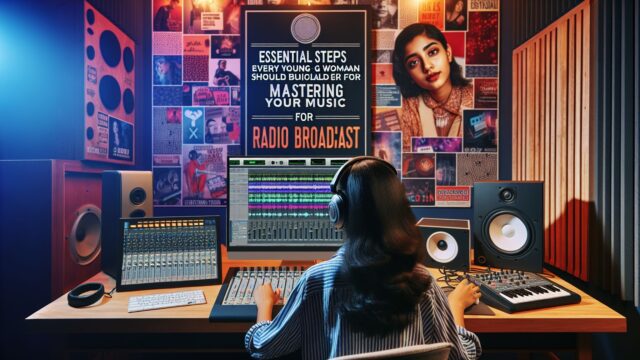
Mastering Your Music for Radio Broadcast: Essential Steps Every Young Woman Should Know

As a young woman breaking into the music industry, you’ve probably put in countless hours perfecting your craft. Your music is ready to be heard, but to ensure it cuts through on radio, it requires mastering – the final stage in music production.

By mastering your music specifically for radio broadcasts, your music will not only sound great but also match the sonic level of other artists played on the radio. This article offers invaluable tips on music production and audio production for aspiring female artists entering this competitive industry.

What Is Music Mastering?

Mastering is the last step in the music production process. Essentially, it’s where the final polish and dimension are added. It balances the different elements, configures your tracks for distribution, and ensures that your music sounds seamless across different platform and playback systems.

Mastering for radio is specifically geared towards making your track optimal for broadcast. Radio mastering ensures your music maintains its texture, depth, and balance when aired on radio, regardless of the listener’s audio set-up.

Why Is Mastering for Radio Broadcast Important?

Due to various factors, like intended audience demographics, play frequency, time and date of the play, stations employ different equalization and compression settings. That means, if an unmastered track is played, there are chances its original sound quality may be affected.

While every radio station uses encoding and normalization, mastering ensures your track meets the broadcasting standard. And the better your recording, the less effect the compression algorithms will have on your music.

The Steps You Need to Master Your Music

Here’s your clear step-by-step guide to achieve a broadcast-ready master using music production and audio production.

1. Mixing Stage

Before you think of mastering, a well-mixed track is essential. Every instrument and voice should be clearly audible and well balanced. Panning should be done appropriately to ensure a good stereo image.

2. Dynamic Range Compression

This reduces the range between the loudest and the softest parts in your track. Radio-friendly tracks usually have loud and consistent volume, and dynamic range compression can help achieve that. However, save your overt compression decisions for the mastering phase, ensure your mix is dynamic enough.

3. Equalization (EQ)

Proper EQ can help make your track sound bright and full in a radio broadcast. EQ helps remove muddiness, increase clarity and enhance specific frequencies. Make sure to listen carefully and use EQ tastefully.

4. Limiting

A limiter is a type of compressor designed for a specific purpose: to prevent the audio signal from clipping. Clipping can cause distortion and other unwanted effects that affect the overall sound.

5. Encoding and Reference Testing

After EQ and compression, export your master track to the suitable format. Also, compare your track with commercially successful tracks in the same genre. This might reveal additional adjustments that need to be made to stand up to the competition.

Choosing the Right Mastering Software

Your choice of mastering software can make or break your mastering process. Some reliable options include Logic Pro X, Pro Tools, Ableton Live, and GarageBand. Several online mastering services are also available. Izotope’s Ozone 9, LANDR, and SoundLAB are popular choices. Remember, your mastering tool should align with your comfort, experience, and budget.

Engaging a Professional Mastering Engineer

At times, it might be more suitable to hire a professional mastering engineer. They have the skills, ears, and equipment to deliver a mastered track that’s radio-ready. A professionally mastered track can stand up better in a radio broadcast, giving your music the exposure it deserves.

Moreover, an experienced and unbiased ear can give your music the polish that’s often difficult for the original artist to achieve.

Conclusion

Mastering your music for radio broadcast is an essential step to guarantee your music shines in the best light and competes on an equal footing with other tracks on air. As a young woman in the music industry, this knowledge could hugely benefit your journey.

Whether you decide on DIY mastering or calling in a professional, following these steps in your music production process will increase your chance of getting your tracks onto radio playlists. Most importantly, remember that great art requires patience and practice, so keep honed in on your craft, and success is sure to knock on your door.

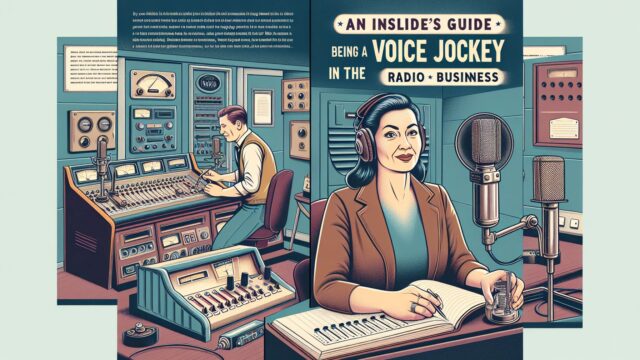
An Insider’s Guide to Being a Voice Jockey in The Radio Business

The world of radio broadcasting holds a unique charm — a world where a voice can mesmerize millions. Becoming a Voice Jockey (VJ) in radio broadcasting involves more than just smooth vocals and theatrical microphone skills. There is a huge shift in the dynamics of the radio industry, with podcasting and audio production becoming increasingly crucial components, and Voice Jockeys need to be adept at them.

A Day in the Life of a Radio VJ

Despite popular belief, the job of a voice jockey isn’t confined to just speaking into a microphone. There’s so much that goes on behind the scenes — from show planning, scripting, to researching the varied topics that one has to talk about.

Also, voice jockeys often play the role of a program manager. From sorting requests, managing interviews, to ensuring smooth transitions between segments, VJs wear multiple hats. Above all, they have to establish a connection with the listeners, interacting with them live through social media or phone calls.

The Influence of Podcasting

Podcasting has brought about significant changes to the landscape of radio. Podcasts offer more flexibility in content and structure, enabling a more targeted approach towards a specific audience.

Voice jockeys need to adapt and explore these new platforms, incorporating a new presentation style that suits the specific needs of podcast listeners. Podcasting also opens a plethora of opportunities to explore niche topics that traditional radio might not accommodate.

Audio Production Skills: A Must-Have

Audio production is no longer synonymous only with sound engineers and broadcasters. A voice jockey in today’s age needs to have a solid grip on audio production. From recording to editing and mixing, the magic behind the microphone now extends to the magic behind the scenes as well.

Modern voice jockeys are expected to be proficient with the usage of audio software and know how to create quality sound recordings. This could involve sound mixing, background scoring, noise reduction, and achieving the perfect sound balance.

Building a Strong Personal Brand

Voice jockeys are more than just radio hosts, they are personal brands. Building a robust personal brand identity is indispensable in this industry. VJs represent the radio station they work at and need to build a bond of trust and familiarity with their listeners.

This comes with public appearances, social media engagement, and sometimes even merchandise. VJs have to maintain an image that resonates with the ethos of the radio station, and also aligns with their own beliefs and values.

The Road to Financial Security

It is no secret that radio jockeys aren’t the highest-paid individuals in the world. However, there’s a lot more to the monetary aspect than meets the eye. Once you’re established and popular among audiences, there are numerous ways to earn, including sponsorships, advertisements, public appearances, or launching your own podcast.

Also, there’s no fixed career trajectory in the world of radio. Many voice jockeys branch out into different media like television, movies or even write books. The possibilities are endless once you’ve created a strong personal brand.

Concluding Thoughts

Working in the radio business is continually evolving, requiring one to be on their toes always. It’s a career that not only lets you nurture your creativity but also allows you to impact the world with your voice. The journey to becoming a voice jockey is not easy – it requires grit, adaptability and an unending passion for audio broadcasting.

Despite the rising popularity of the internet and music streaming platforms, radio continues to hold its steady place. And in this changing dynamic, podcasting and audio production skills have become invaluable. They allow VJs to diversify their scope and reach, keeping them relevant in an ever-evolving industry.

So, if you enjoy communicating, love the thrill of live broadcasting, and are not averse to the spotlight, a career as a Voice Jockey in the radio industry might just be your calling.

Harnessing the Power of Radio Advertising for Local Music Producers

Many businesses are quick to conclude that in this contemporary digital age, traditional forms of advertising have become obsolete – especially local music producers who might presume that their target audiences are more likely to be found streaming music online. However, not only is radio advertising still relevant, but it also possesses unique advantages that can propel a local music producer to new heights of brand recognition and success.

Relevance and Reach: The Undeniable Impact of Radio Advertising

Despite the prevalence of digital media platforms, radio remains a significant player in the advertising field for three primary reasons – its extensive reach, its targeting capabilities, and the personal connection it creates with listeners.

With more than 244 million monthly listeners in the U.S. alone, radio offers local music producers an unparalleled reach. While music streaming platforms are gaining popularity, the percentage of people who listen to the radio is still significantly greater than those who stream music.

Furthermore, radio advertising enables precise targeting. Stations often cater to specific demographic groups, categorized by age, occupation, and musical preference. For music producers, this means the opportunity to strategically place their advertisements where they are most likely to reach their intended audience.

Lastly, the nature of radio creates a personal connection with listeners. Radio is often consumed while driving, working, or during downtime – situations where listeners are alone and able to form a unique bond with what they are hearing.

The Resilience of Radio in the Digital Age

Despite the surge of digital platforms, radio has proved remarkably resilient. One explanation for this resilience is that radio compliments, rather than competes with, digital media. People listen to the radio while using their phones or computers, ensuring that audio content continues to engage audiences even when other forms of digital media might not.

Streaming music platforms are also changing the way we consume music, and these shifts present an opportunity for music producers. By advertising on both traditional radio and streaming platforms, producers have the opportunity to reach their audiences more comprehensively.

Capitalizing on Radio for Music Producers – The How-To

Local music producers can tap into the power of radio advertising through a few key steps.

  1. Identify your target audience: Before investing in any advertising channel, understanding your target audience is crucial. Determine the demographic profile of your ideal listener and consider which stations they are likely to listen to.
  2. Craft a compelling message: The strength of your advertisement lies in the power of your message. Music producers should use their ads to tell a story about their brand and use music to enhance this narrative.
  3. Choose the right time slots: Prime listening times typically happen during morning and afternoon commutes. However, your specific target audience’s habits should dictate the timing of your ads.
  4. Measure your results: As with any marketing effort, assessing your return on investment will allow you to refine your strategy. Make use of available radio metrics and be ready to adjust your approach as needed.

Incorporating Streaming Music Platforms into your Strategy

Consider augmenting your radio advertising with ads on streaming music platforms. With the rise of platforms like Spotify and Apple Music, there are more opportunities than ever to reach music listeners in an online environment. Similar to radio, streaming music platforms offer targeted advertising, making it a efficient way to reach your intended audience.

In conclusion, while the arrival of the digital age has certainly introduced new ways for music producers to advertise their craft, it has not heralded the end of radio advertising. In fact, the combination of traditional radio advertising with digital streaming advertising presents a well-rounded strategy for local music producers to reach their target audience, connect with them on a personal level, and ultimately, increase brand recognition and success.

With a carefully planned strategy and the power of a compelling message, radio advertising can still hold the key to expansive reach – something every music producer strives for. So let’s give radio advertising the consideration it deserves in the realm of music production. The airwaves are still open – will your music be playing?

What Are the Best Practices for Podcast Promotion?

Millions of daily listeners are exploding podcasts across a wide range of subjects. Given such a saturated market, however, how do you make sure your podcast stands out? Strategic promotion is the answer. Knowing the top techniques for podcast promotion is crucial whether you are starting out or wishing to expand your already existing audience. The best techniques to transform your podcast into the talk of the town will be our main focus.

  1. Create a Strong Foundation with High-Quality Content

Good product is the foundation on which outstanding marketing rests. Before you give attention to promotion, check to see if your podcast merits it. To improve show recommendations and audience participation, generate engaging, knowledgeable, and pertinent content with a simple layout, quality sound, and consistent episode release schedule.

  1. Leverage Social Media for Maximum Reach

Promote your podcast using social media outlets like Instagram, Twitter, TikTok, and LinkedIn, which includes interesting episodes and interactive content. By inspiring people to give comments and tag their friends, one can build a devoted followership.

  1. Collaborate with Other Podcasters and Influencers

Working with podcasters and others of influence will help you rather significantly expand your audience. You introduce your content to their viewers by either appearing on their show or having them on yours. These alliances let you establish legitimacy in your field and access different consumers.

  1. Optimize Your Podcast for Search Engines

Search Engine Optimization (SEO) is crucial not only for website and podcast marketing but also for blogs. Include precise search terms in your podcast title, description, and other episode details. For instance, be detailed in your podcast description, such as “digital marketing tips” or “content strategies.” Listeners will use this to find your show conveniently on Google or Apple Podcasts.

  1. Paid Advertising to Expand Your Reach

Paid marketing can drive your podcast more, even though natural growth is excellent. Ideal for running aimed ads are Facebook, Instagram, YouTube, and other social media sites. For instance, you might use YouTube ads placement targeting to make sure your podcast is seen by viewers who already find the same sort of content of interest. Paid commercials could let you develop brand recognition and get fresh audience members more quickly.

  1. Engage Your Audience Through Email Marketing

Although usually disregarded, email marketing is an extremely efficient means of promoting your podcast. Compile your audience and possible fans’ email addresses. Send weekly newsletters including behind-the-scenes ideas, fresh episodes, unique content, or other updates. Custom emails ensure your audience remain interested and inspire consistent listening.

  1. Encourage Listener Reviews and Recommendations

One of the most potent forms of marketing is still word-of-mouth marketing. Request your audience members to rate Apple Podcasts or Spotify. Great ratings increase your show reputation and visibility in platform algorithms. Have your audience recommend your podcast to friends or on social media. Many times, a straightforward inquiry will suffice.

  1. Analyze Metrics to Refine Your Strategy

Analyzing metrics including downloads, demographics, and engagement rates will help you to identify areas of improvement for your podcast and so change promotional approach. Utilize analysis tools to keep track of your podcast’s performance.

Conclusion  

Successfully advertising a podcast calls for a mix of consistency, originality, and planning. By concentrating on good content, using social media, teaming with others, and leveraging tools like paid ads, you can increase your program and create a loyal audience. Apply these tactics to ensure your podcast’s maximum growth, as success isn’t instantaneous but achievable with the right attitude.

Breaking Into The Radio Business: College Classes Ideal for Your Journey

Getting into the radio industry is an exciting venture filled with a myriad of opportunities in broadcasting, announcing, production, and technical work. Your choice of college courses can build a solid foundation to set you on the path towards a successful radio career, so choosing wisely is crucial. This guide sheds light on prime selections for college students interested in making their mark on the airwaves.

Major Courses: Focus on Communication and Broadcasting

To break into the radio industry, it’s advisable to pursue a Bachelor’s degree in Communication, Journalism, or Broadcast Journalism. However, a determined interest in radio, combined with appropriate skill sets, can sometimes bridge the gap even without a related degree. Therefore, regardless of your major, you should consider enrolling in the following classes.

1. Introduction to Broadcasting

Your journey into radio broadcasting begins with an introduction to broadcasting—the foundation class for any radio media career. This course generally covers the evolution of TV and radio broadcasting. You’ll walk away with an understanding of how radio slots and programs are structured, along with history and legislatives that have shaped the industry.

2. Media Production and Technology

In this class, you’ll learn the technical nuances of radio, including how to produce, edit, and mix audio. The technical competencies gained from this course are a fundamental requirement in a radio station.

3. Announcing and Voice-Over

This course will help you refine your on-air presence, teaching you the art of delivery, clarity, enunciation, and pacing. The tools acquired in this class make it ideal for students who envision themselves as radio hosts or announcers.

4. Audio Storytelling and Podcasting

Modern radio isn’t just about broadcasting information; it’s about telling stories that engage listeners. Thus, a class in audio storytelling can help you master how to create compelling, emotionally resonant audio stories. Moreover, the rise of podcasts makes this course profoundly relevant to the current radio landscape.

5. Laws and Ethics in Broadcasting

As a future member of the radio industry, you need to be aware of its legal and ethical landscape. This course fosters an understanding of legal standards, ethical boundaries, and social responsibilities pertaining to radio communications.

Complementary Courses: Broaden Your Horizons

In addition to the major courses, enrolling in complementary courses will enhance your skill set, making you more versatile and employable in the radio industry.

1. Public Speaking

Understanding the principles of effective public speaking can intensify your radio communications’ impact by improving your speech writing and oral communications skills.

2. Audio Engineering

A course in audio engineering can give you a deeper understanding of the technical intricacies of sound transmission.

3. Business and Marketing

Radio is as much business as it is a creative pursuit. In this course, you’ll learn about product management, advertising on radio stations, and other business strategies.

4. Drama or Theater Studies

These classes improve your ability to read scripts convincingly, an essential skill for radio jockeys, producers, or broadcast journalists.

Conclusion: A Thoughtful Roadmap to Success

Choosing your college classes wisely can be the determinant of your success in the radio industry. While studying broadcasting-specific courses, remember to consider complementary classes that enrich your skillset and equip you to express ideas effectively, understand the business landscape, and navigate the technical aspects of broadcasting. After all, the radio industry is a broad and fast-paced field that requires a mix of skills and knowledge bases.

As you navigate your radio career journey, remember that coursework is fundamental, but the experience garnered from internships, part-time jobs, or volunteering in local radio stations is just as vital. Armed with the right combination of education and experience, your journey into the radio business will be dynamic, exciting, and rewarding.

Step Into The Soundwaves: Becoming A Radio Station Manager

The role of a radio station manager is not as public-facing as that of a radio host, but it carries its own unique set of challenges and rewards. This post will dive into the realities and expectations of the job, offering a comprehensive perspective to anyone considering a career in radio.

A Profession of Gatekeeping: The Role of a Radio Station Manager

A radio station manager works behind the scenes, ensuring that the radio station operates smoothly. They are the unseen backbone of broadcasting and music production, holding a key role in programming, advertising, staff management and regulation compliance.

Daily tasks could involve setting advertising goals, hiring and training staff, overseeing news and program production, ensuring compliance with broadcasting laws and regulations, and maintaining relationships with record companies, advertisers, and community organizations.

Broadcasting but not Broad-brushing: The Specifics of the Job

For potential station managers in the making, having technical knowledge about broadcasting equipment and music production standards is a prerequisite. The station manager is also expected to keep an eye on everything from broadcast schedules to sales reports, and ensuring a happy and harmonious work environment.

Conducting Harmonies: People Management

Management, at its core, is about people. As a radio station manager, you’re not just playing conductor for the station’s broadcast music, but you’re conducting the symphony of staff and personalities that keep the radio station alive, ensuring their work harmonizes well.

Your main role is to support and nurture these talents, managing their needs, providing clear goals, and maintaining a positive working environment. You should master the art of assertiveness: knowing when to hold firm on rules and regulations and when to allow creative freedom and flexibility.

Echoing Regulations: Compliance and Legal Responsibilities.

A radio station manager must also oversee the station’s regulatory compliance, including laws governing advertising and broadcasting, copyright and content restrictions, and public-service requirements. This results in dynamic day-to-day tasks that blend creative music production with meticulous rule-following and careful record-keeping.

Tracing the Waves: Keeping Up With the Radio Industry

Understand that the job of a radio station manager is inseparable from the broader trends of the radio industry. You are tasked with tracking and understanding these trends in order to keep your station relevant and successful. Whether it’s the rise of podcasting, new digital broadcast technologies, or shifts in musical tastes, your success is tied to your ability to stay driven and adaptable.

Set Your Frequency: Building Strong Connections

Networking is another part of the role that shouldn’t be underestimated. A station manager’s connections can range from local merchants to corporate sponsors to myriads of music labels, agents, and artists. These relationships fuel everything from sponsorship deals to music licensing agreements – so it’s important to work on building and maintaining strong ties.

Tuning into the Job: The Final Takeaways

A good station manager is an effective navigator of this exciting, high-pressure environment, able to balance a range of responsibilities. They must be a good people manager, skilled in negotiations, knowledgeable about music production & broadcasting technologies, mindful of compliance & legal requirements, and capable of networking effectively.

In stepping into this role, expect a career that is challenging, fast-paced, and ultimately very rewarding. While you may not be the voice that radio listeners hear, the station’s success will be your music, and the harmonious working of its varied elements, your symphony.

Sound Matters: Essential Audio Gear for High-Quality Radio Broadcasts in Advertising

Radio broadcasting is an integral part of advertising that continues to prove its effectiveness despite the ceaseless technological advancements in the industry. To ensure your radio advertising campaigns resonate well with your audience and make an impact, it is crucial to use premium-grade audio gear that guarantees excellent sound quality. This blog post will uncover the top audio equipment your agency should have to deliver high-quality radio broadcasts.

Building a High-Quality Sound System

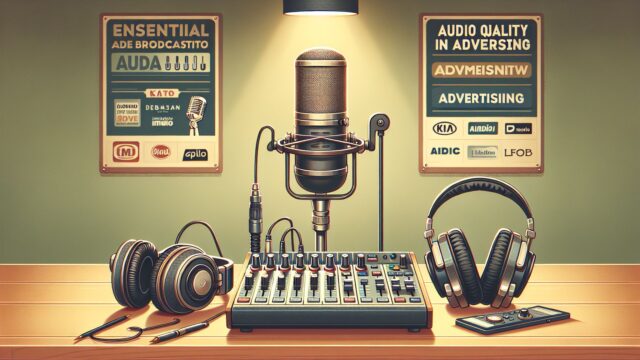
Building an outstanding sound system involves various components, each playing a vital role in radio production. Among the crucial gear required for a top-notch result are microphones, mic processors, audio mixers, studio monitors, headphones, and broadcasting software.

1. Microphones

For distinct, crystal-clear sound in your radio broadcasts, investing in a professional radio broadcasting microphone is mandatory. The Heil PR40, revered in the radio industry for its superior performance, stands out among the countless options available on the market. It boasts an excellent frequency response tailored for voiceovers. Another excellent option is the Electro-Voice RE20, known for minimizing the proximity effect, making it a top choice for radio broadcasters worldwide.

2. Mic Processors

A mic processor goes hand-in-hand with your mic, enhancing the voice’s quality by managing its tone and volume. The dbx 286s Microphone Pre-amp Processor offers a comprehensive solution that refines your microphone’s output by incorporating a mic preamp, compressor, de-esser, enhancer, and an expander/gate.

3. Audio Mixers

An audio mixer is essential in radio broadcast production, allowing you to control the audio sources’ volume levels, their balance, and the sound’s tone quality. The Yamaha MG10XU, coupled with D-PRE preamps, is a versatile option with a user-friendly interface suitable for live performances and studio use.

4. Studio Monitors

Studio monitors let you listen to the broadcast exactly as your audience would, enabling you to create a truly immersive experience. KRK Rokit 5 G4 is one of the best studio monitors available in the market, notable for its frequency response that delivers precise and accurately balanced sound.

5. Headphones

High-quality headphones ensure clear, detailed listening during the editing process. The Audio-Technica ATH-M50x, applauded for its circumaural design and precise sound isolation, is a favorite among audio industry professionals.

6. Broadcasting Software

Lastly, you’ll need dependable software to mix and broadcast your ads. Adobe Audition or Pro Tools fit the bill, renowned for offering exhaustive audio post-production and editing capabilities for radio broadcast and other applications.

Considerations When Choosing Audio Gear

Keep in mind that aspects such as sound isolation, the size of your broadcasting room, and your budget can influence the kind of audio gear you select. Make sure to pick equipment that suits your specific needs and circumstances.

Conclusion

Overlooking the quality of audio gear in radio broadcasting can mar the effectiveness of your advertising campaigns. Therefore, it’s important to invest in the right equipment as it would not only enhance your advertisements’ audio quality but also have the potential to dramatically increase their impact on your target audience.

Remember, listeners appreciate excellent sound quality, and it often leaves a lasting impression – this is precisely the kind of influence you want your radio advertisements to have. So, whether you’re a seasoned advertising professional or just starting out in the industry, make sure your audio gear checklist includes a professional microphone, mic processor, audio mixer, studio monitor, headphones, and robust broadcasting software. Now, go forth and make some noise!

The Benefits of Local Radio Ads for Professional Voice Jockeys

With the media landscape constantly evolving, the role of radio jockeys, or RJs as they are commonly known, has had to adapt and expand to stay pertinent and effective. One area that offers tangible benefits to RJs is the use of local radio ads. This article will explore the significant perks derived from the use of these ads and why any RJ seeking to widen their reach, boost engagement, and offer a whole new layer of relevance should consider this approach.

Penetrating Local Markets

When it comes to amassing a loyal listener base or even reaching the pinnacle of the RJ profession, local markets can’t be overlooked. Local radio stations are often the lifeblood of many communities, offering a unique blend of customized news, entertainment, and ads that resonate with the local population.

On this platform, RJs have the opportunity to carve out a unique identity that is deeply entwined with their listeners. Promoting a specific product, service, or even an upcoming event through a 30 second radio spot can produce high impact results. Listeners are far more likely to react positively to an ad repeated by a familiar voice such as the RJ they tune into regularly. This trusted connect is something unique to radio advertising, especially on local stations, and it’s an advantage RJs should harness.

Enhancing Community Engagement

Aside from the financial perspective, local radio ads present an excellent opportunity for RJs to engage more directly with their community. In a 30-second radio spot, RJs can effectively promote local businesses, shout out noteworthy community achievements, or even push for involvement in local events.

This proactive approach not only cultivates a deeper connection with listeners, but it also positions the RJ as an active advocate for the community. When RJs speak, their listeners don’t just hear; they are more inclined to take action. Hence, this impacts positively on the radio station, the advertiser, and, by extension, the local community.

Generating Additional Income

In the RJ profession, earning a steady income can sometimes be a challenge. However, local radio ads can play a significant role in generating additional income. RJs- who negotiate to include ad spots into their contracts, can benefit from bonuses or commissions from the ads played during their show.

Also, well-established RJs who have cemented their voice as a recognized ‘local brand’ can be in high demand for recorded ads. An engaging 30 second radio spot recorded in a recognizable voice can do wonders to boost the offering’s visibility.

Showcasing Versatility and Expanding Skill Set

RJs are inherently creative individuals. The practice of incorporating local radio ads allows these professionals to showcase their versatility. Crafting a compelling 30 second radio spot requires the RJ to employ a different set of skills than their usual gig of engaging an audience over longer durations.

RJs who invest the time and effort to master this art form increase their value to their employers, making them irreplaceable assets. In addition, they expand their skill set, opening doors to freelance advertising work and more.

Conclusion: A Win-Win for Everybody

Taking full advantage of local radio ads can reap considerable benefits for radio jockeys, the radio stations they work for, and the local community as a whole. RJs can penetrate local markets, improve community engagement, generate additional income, and showcase their versatility.

At the same time, radio stations can offer more value to their advertisers and listeners. Local businesses and communities get a boost, and the endorsed products and services enjoy a higher likelihood of success.

Ultimately, using local radio ads and the versatile delivery of 30 second radio spots is a win-win proposition for everyone involved. Integrating such marketing efforts into the RJ role enriches the profession, cements local radio’s relevance in today’s media landscape, and enhances the RJ’s career trajectory.

Mastering Your Music For Radio Broadcast: Elevating Your Sound to the Next Level

As an artist, one of the most exhilarating experiences is hearing your own music being played on the radio. However, getting your music to sound radio-ready isn’t necessarily a walk in the park. It involves a crucial process known as mastering that requires careful attention to detail and a proficient understanding of audio production.

Mastering your music for radio broadcast is the final step in music production, where the track is polished and optimized for the end listener’s playback system. This process ensures that your music will translate well across different playback systems, such as radio, streaming platforms, or even in a nightclub.

So, as a musician looking to get your tunes on the radio, where do you start? What steps do you need to take to ensure your music sounds just as fantastic on the radio as it does in your home studio? Let’s dive in and find out.

Understanding the Importance of Music Mastering

The actual process of mastering involves adding final touches to enhance your music’s overall sound, including balancing the EQ, leveling dynamics, correcting minor errors, and preparing your music for distribution. Mastering for the radio specifically requires an in-depth understanding of both music production and audio production, as both play important roles in how your song is experienced by listeners.

Now, you might be wondering, how does radio play different from regular streaming or CD playback? Radios have unique compressors and limiters, making certain frequencies stand out more than others. Your well-mixed track might sound off-balance on the radio if it’s not properly mastered. Therefore, mastering your music to suit radio specifications is a necessary step if you’re aiming to get your song on the airwaves.

Techniques of Mastering Your Music for Radio Broadcast

  1. Balancing your Mix: Before mastering, ensure that your mix is well balanced. All elements of your song, such as vocals, guitar, bass, and drums, should be audible and in harmony with each other.

  2. Correct Use of EQ: During mastering, your song’s frequency spectrum needs to be well handled. Apply EQ subtly and avoid drastic changes. The important thing is to maintain a balance so that no one frequency range overpowers another.

  3. Managing Dynamics with Compression and Limiting: Proper use of compression and limiting is crucial while mastering for radio. Remember, radio stations compress songs further, so over compressing can result in a flat, lifeless track. Also, watch out for over-limiting, as this might distort your music.

  4. Listening Environment: It’s always recommended to master in a well-treated room with good speakers or headphones. It will help you make accurate decisions during the process.

  5. Loudness Level: Radio regulates loudness to ensure consistency between songs. Therefore, aiming for excessive loudness can lead to additional compression by radio’s processing system, affecting your music negatively.

  6. Stereo Imaging: Maintaining good mono compatibility is essential for radio play. Remember, not all radios have stereo speakers. Use stereo imaging techniques wisely to ensure your mix doesn’t lose important elements when summed to mono.

Role of Music and Audio Production Software

When it comes to mastering, different music production software and audio production tools serve unique purposes. However, understanding how to effectively use these tools is just as important as the tools themselves. Look for software with features like EQ, compression, limiting, stereo imaging, and metering.

Mastering can be a complex process, but plenty of resources provide detailed guides on using these tools. Alternatively, if you’re unsure about mastering on your own, professional mastering services are also available to ensure your music is radio-ready.

Conclusion

Mastering your music for radio play might appear daunting at first, but understanding the intricacies between various stages of music production can help you navigate this process more efficiently. As an artist, your music is your identity. It represents who you are and what you stand for. Hence, dedicating time and effort to make your music sound the best it can on the radio is indeed worth the endeavor.

Indeed, the journey to mastering your music for radio broadcast can seem like an uphill task. But armed with determination, the right tools, and a bucket load of passion for your craft, you will soon find your music resonating through radio speakers worldwide, reaching new audiences, and creating lasting impressions.